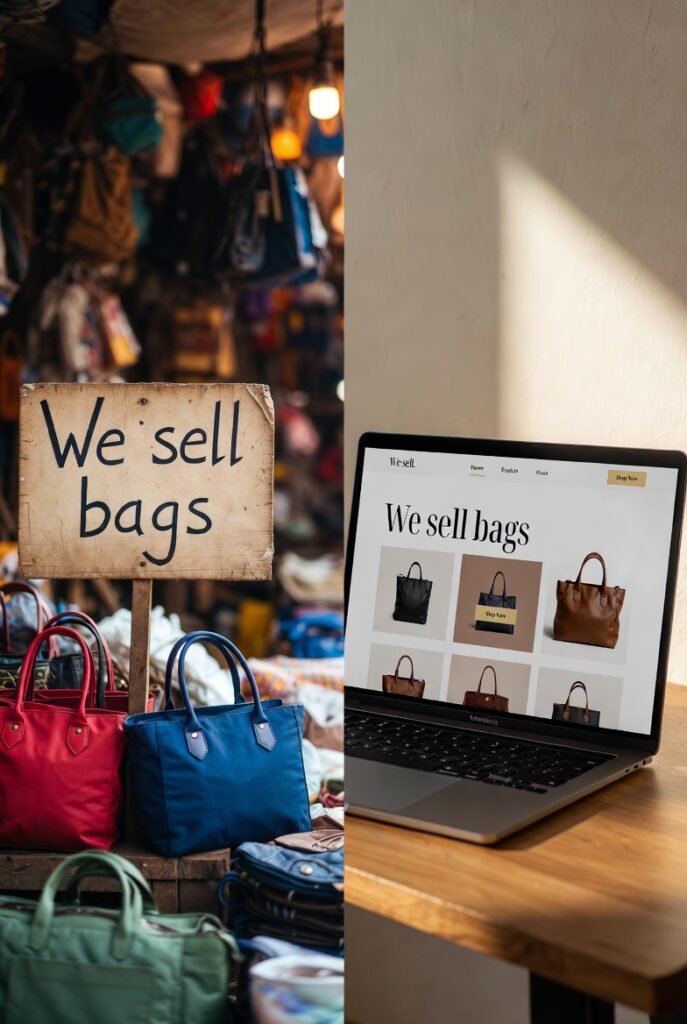
Walk through Balogun Market in Lagos, Wuse in Abuja, or Uselu in Benin City, and you’ll see something incredible — thousands of businesses moving real money every single day. Tailors, electronics dealers, food vendors, fashion designers, mechanics, agro-processors. Hustle at its finest.
Now open your phone. Search for them on Google. Most of them?
Invisible.
According to a 2023 report by the
International Finance Corporation (IFC) and
Google’s e-Conomy Africa report, fewer than
27% of Nigerian small and medium-sized enterprises have a functional, professional website. That means
over 7 out of every 10 businesses in Africa’s largest economy are digitally invisible — operating as if the internet doesn’t exist, while customers increasingly refuse to buy from anyone they can’t verify online.
The Painful Math of Invisibility
Africa’s digital economy is projected to hit
$712 billion by 2050, according to Google and the IFC. Nigeria alone is forecast to contribute over
$88 billion to that figure. But here’s the catch:
that money flows to businesses the internet can find.
When a potential customer searches “best Ankara tailor in Auchi” or “solar installer near me in Benin City,” Google shows them businesses with websites, Google Business Profiles, and reviews. Every other tailor, solar installer, or service provider — no matter how skilled — simply does not exist to that buyer.
That’s not a small problem. That’s
lost revenue, every single day.
Why So Many African SMEs Stay Offline
After speaking with dozens of business owners across Edo State and beyond, we’ve found the same three myths killing digital growth:
1. “A website is too expensive.”
Reality: A professional website today can cost less than a single month of market stall rent. What’s truly expensive is losing customers every week because they couldn’t find you.
2. “WhatsApp and Instagram are enough.”
Social media is rented ground — one algorithm change, one banned account, and your business disappears. A website is
your digital land. You own it. It works 24/7, ranks on Google, and doesn’t depend on Meta’s mood.
3. “My customers don’t use the internet.”
Nigeria has over
122 million internet users (NCC, 2024) — that’s more than the entire population of most African countries. Your customers are online. The question is whether you are.
The 5-Step Fix — You Can Start This Week
- Claim your brand name. Register a .com or .com.ng domain that matches your business name.
- Get a professional website. Not a free Wix page with ads — a clean, fast, mobile-first site that represents your brand at the level it deserves.
- Set up Google Business Profile. Free, powerful, and it puts you on the map — literally.
- Publish real content. Blog posts, FAQs, product pages. Every page is another door for customers to find you.
- Connect your socials to your site. Let Instagram and WhatsApp feed traffic back to the digital land you own.
The AfriPresence Difference
At
AfriPresence Studio, we build professional websites for African businesses — small, medium, or enterprise — so they can compete globally without losing their local soul. From Auchi to Accra, from Benin City to Nairobi, we believe
no business, no matter how small, should be offline.
Africa’s digital moment is here. The question isn’t
whether you’ll go online. It’s
whether you’ll still be around when your competitors do it first.
Ready to stop being invisible?
👉
Book a free digital presence audit with AfriPresence Studio today — and let’s put your business on the map, for real.